Artificial
Intelligence feels like a uniquely modern marvel, driving everything
from self-driving cars to advanced conversational agents like ChatGPT.
However, the dream of creating machines that can think has fascinated
humanity for nearly a century. The history of AI is a dramatic tale of
groundbreaking discoveries, overhyped promises, bitter "winters," and
ultimately, a technological revolution.
The 1950s: The Genesis of AI
The
modern AI timeline officially began in 1950 when British mathematician
Alan Turing published his paper "Computing Machinery and Intelligence."
He proposed the "Turing Test," a method for determining if a machine can
exhibit intelligent behavior indistinguishable from a human. A few
years later, in 1956, the term "Artificial Intelligence" was formally
coined by computer scientist John McCarthy during the historic Dartmouth
Conference. This two-month workshop brought together the brightest
minds of the era and is widely considered the birth of AI as an academic
discipline.
The 1960s to 1980s: High Hopes and AI Winters
The
years following Dartmouth were filled with optimism. In 1966, MIT
researcher Joseph Weizenbaum created ELIZA, an early natural language
processing program that could simulate a psychotherapist. However, by
the 1970s, it became clear that early researchers had drastically
underestimated the difficulty of teaching computers to understand the
real world. A lack of computational power led to funding cuts, resulting
in the "First AI Winter" (1974–1980). The 1980s saw a brief resurgence
with the rise of "Expert Systems"—programs designed to mimic the
decision-making of human experts. Yet, these systems were expensive and
difficult to maintain, leading to a "Second AI Winter" in the late
1980s.
The 1990s to 2000s: The Machine Learning Resurgence
As
the 20th century drew to a close, the focus shifted from logic-based AI
to statistical methods and machine learning. Thanks to Moore’s Law,
computers finally had the processing power required to crunch large
datasets. In 1997, IBM’s Deep Blue made global headlines by defeating
world chess champion Garry Kasparov. It was a massive psychological
milestone, proving that machines could outperform humans in highly
complex strategic environments.
The 2010s to Present: The Deep Learning Era
The
true explosion of modern AI occurred in the 2010s, fueled by the advent
of Deep Learning, massive datasets, and powerful GPU processing. In
2012, a neural network called AlexNet shattered records in image
recognition. In 2016, DeepMind’s AlphaGo defeated the world champion in
the ancient board game Go, a feat experts thought was decades away. The
next massive leap came in 2017 when Google researchers introduced the
"Transformer" architecture. This breakthrough revolutionized natural
language processing, directly paving the way for Generative AI models
like OpenAI's GPT series, which have brought AI into the everyday lives
of billions of people.
Today,
AI is evolving at a breakneck pace. From Turing’s theoretical test to
modern neural networks that write poetry and code, the timeline of AI
proves that human ingenuity, patience, and computing power can turn
science fiction into science fact.
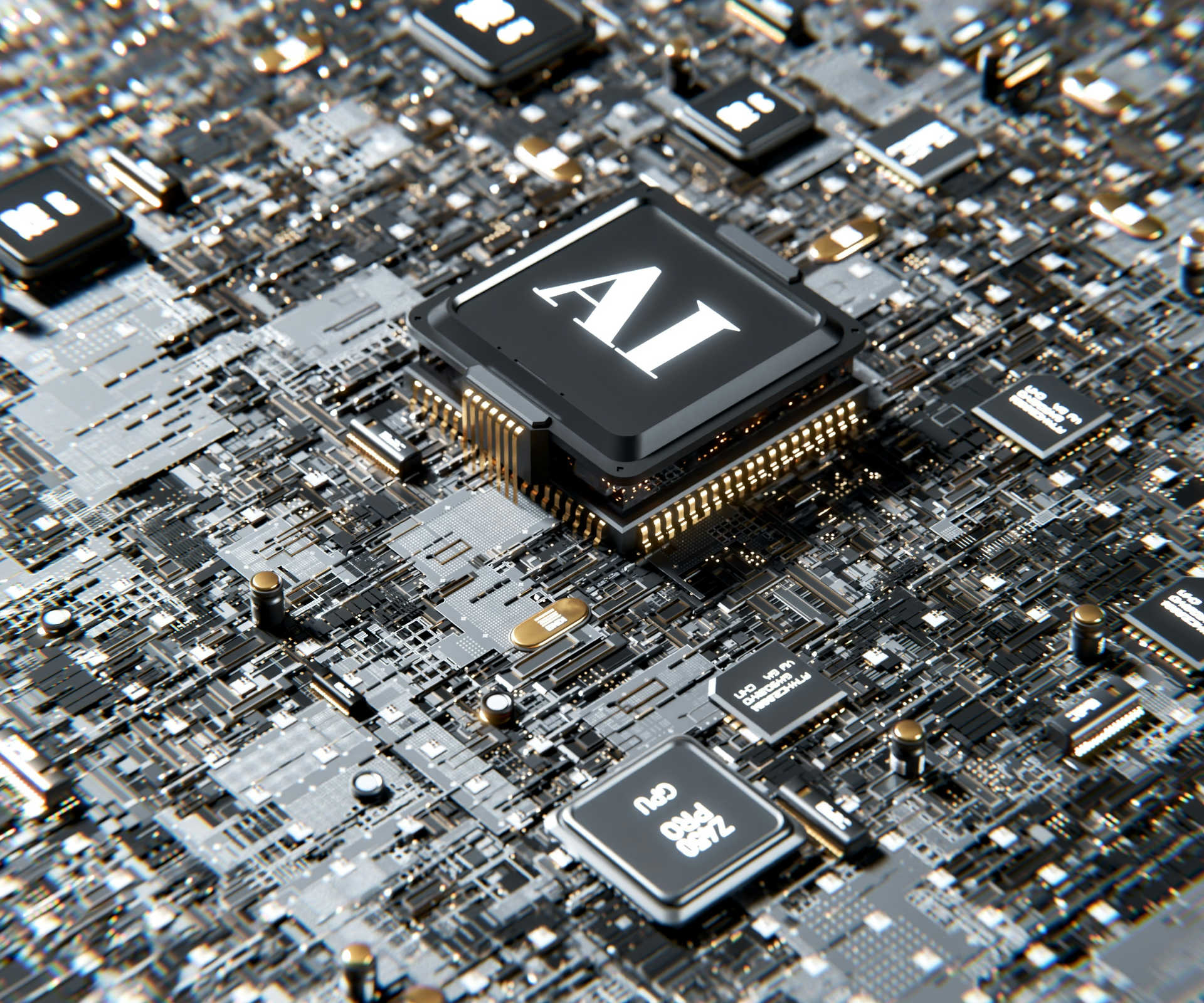
Photo by Igor Omilaev on Unsplash