In
the fast-paced world of web development, choosing the right framework
can make or break your project. With dozens of options available,
developers are constantly looking for the perfect balance of speed,
scalability, and security. Enter Django, a high-level Python web
framework built by experienced developers to handle the heavy lifting of
web development. Famously branded as "the web framework for
perfectionists with deadlines," Django has grown into one of the most
popular backend frameworks in the world. But what exactly makes it so
good?
First
and foremost is Django’s "batteries-included" philosophy. Unlike
micro-frameworks that require you to piece together various third-party
libraries for basic functionality, Django comes out of the box with
everything you need. It includes a powerful Object-Relational Mapper
(ORM) that allows developers to interact with the database using Python
code instead of complex SQL queries. It also features a fully
functional, highly customizable administrative interface that generates
automatically based on your models. Features like user authentication,
content administration, site maps, and RSS feeds are built directly into
the core, saving developers hundreds of hours of configuration.
Security
is another area where Django shines brightly. The internet is fraught
with vulnerabilities, and building a secure application from scratch is a
daunting task. Django takes security incredibly seriously and provides
built-in protection against many common security mistakes. By default,
it automatically mitigates risks like SQL injection, cross-site
scripting (XSS), cross-site request forgery (CSRF), and clickjacking.
Its user authentication system provides a secure way to manage user
accounts and passwords, meaning developers don’t have to reinvent the
wheel when it comes to keeping user data safe.
Furthermore,
Django is immensely scalable. When a project grows, the backend must be
able to handle increased traffic and complex database queries without
crashing. Because Django uses a "share-nothing" architecture, you can
add hardware at any level—database servers, caching servers, or web
servers. Some of the busiest sites on the internet, including Instagram,
Pinterest, and Spotify, rely on Django to serve millions of users
daily. If it can handle their traffic, it can undoubtedly handle yours.
Finally,
Django strongly enforces the DRY (Don't Repeat Yourself) principle. The
framework is designed to help developers write clean, maintainable, and
reusable code. By strictly separating the data model, business logic,
and user interface (via its Model-View-Template architecture), Django
makes it incredibly easy to manage large codebases and collaborate
within teams.
In
conclusion, Django offers an unparalleled combination of speed, robust
security, and out-of-the-box functionality. Whether you are a solo
developer building an MVP for a startup or a large enterprise scaling a
global application, Django provides a reliable, elegant, and highly
productive foundation to bring your web ideas to life.
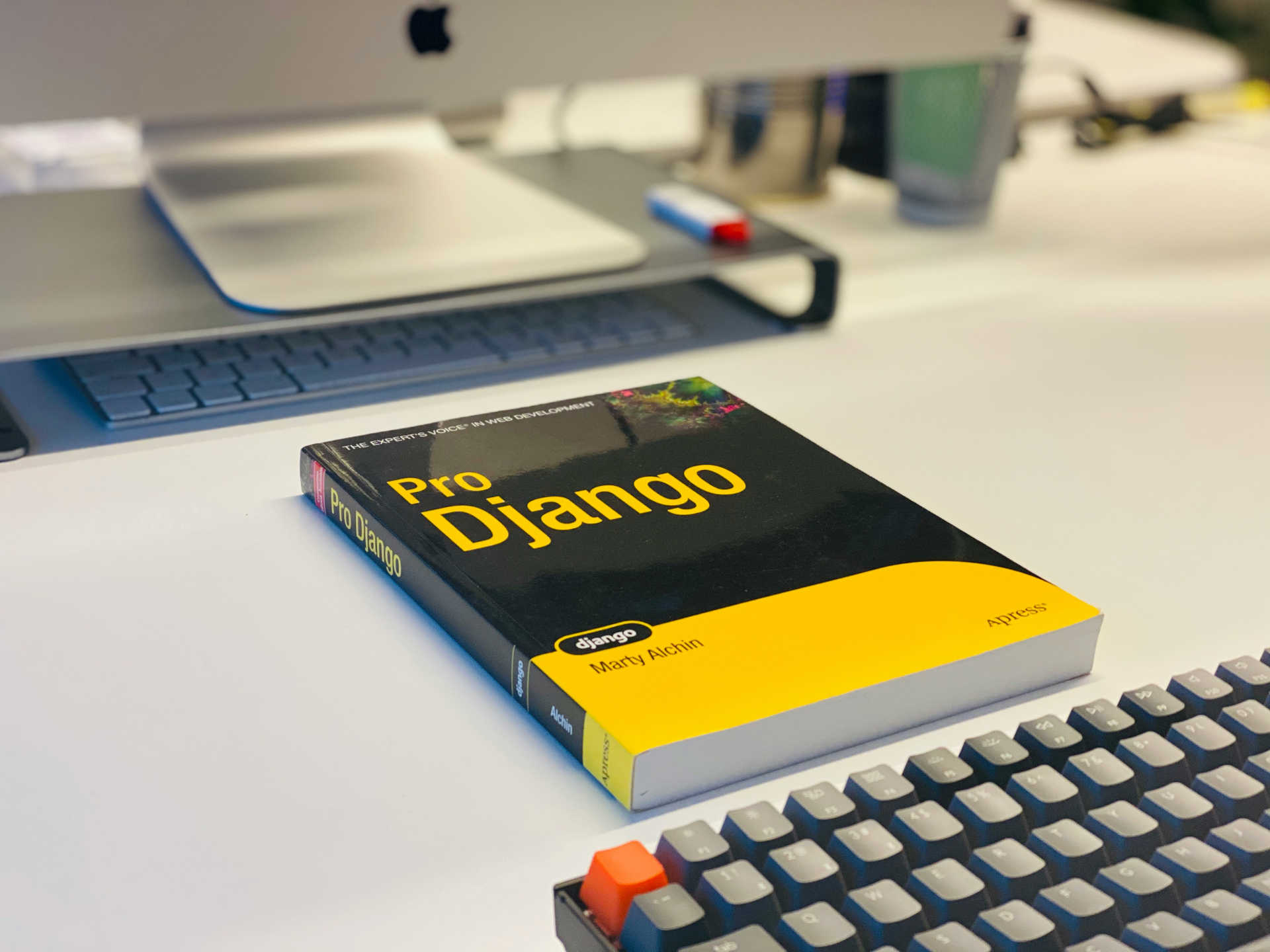
Photo by Faisal on Unsplash